
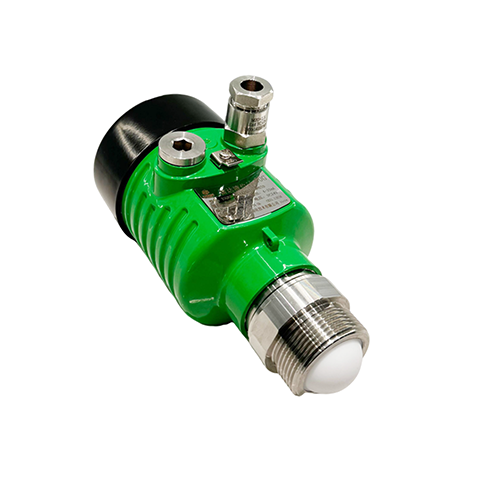
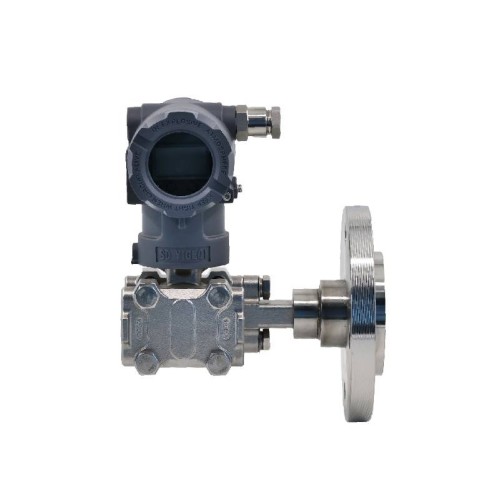
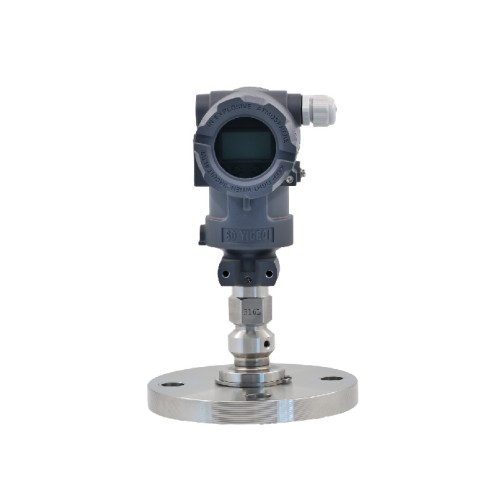
I. Main Working Principle (Dual System)
It consists of two parts working in tandem: a measurement system and a purging system.
1. Radar Measurement System (Core)
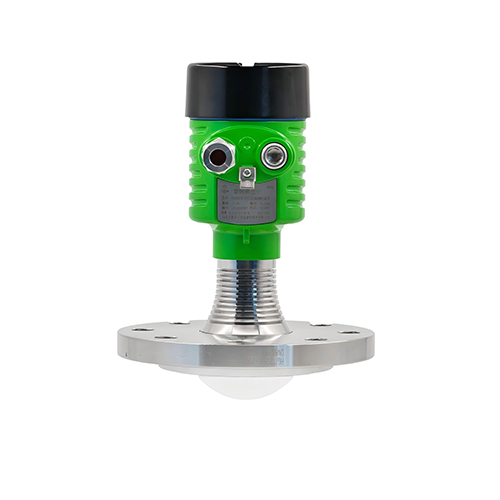
* Basic Principle: Based on the "time difference principle." The instrument antenna emits high-frequency microwave pulses (usually K-band or higher, such as 26GHz). After the microwaves contact the surface of the measured material, they are reflected back and received by the same antenna. The processor inside the instrument calculates the time difference between transmission and reception, and then, based on the speed of microwave propagation in the medium, accurately calculates the distance from the antenna to the material surface, thus converting it into the material level height.
* Key Point: The accuracy and stability of the measurement depend entirely on the clarity of the transmitted/received signals. Any contaminants adhering to the antenna will cause signal attenuation, scattering, or the generation of false echoes.
2. Universal Purging System (Guardian)
* This part is the core of the "universal purging," and its working principle is as follows:
* Gas Supply: Connect to the plant's instrument air or inert gas (such as nitrogen). The gas must be clean, dry, and oil-free.
• Purification and Pressure Stabilization: The gas first passes through a filter and pressure reducing valve to remove impurities and moisture, stabilizing the pressure at a low setpoint (e.g., 0.2-0.5 MPa).
• Flow Regulation and Indication: The gas flow passes through a rotor flow meter (or similar flow indicator) and a regulating valve. The operator adjusts and maintains the purge gas flow rate at a very small value (e.g., a few liters/minute to tens of liters/hour). This constant low flow rate is crucial, providing protection without significantly interfering with the internal pressure or materials of the container.
• Universal Transfer: The gas flow passes through a purge tube with universal joints (e.g., ball joints, multi-directional rotatable threaded tubes).
• Precise Directional Spraying: Installation and maintenance personnel can freely and flexibly adjust the orientation of the purge nozzles to face the radar antenna's transmitting surface (e.g., the inner wall of the horn, the center of the parabola, or the base of the waveguide cable/rod), and then lock it in place. A continuous, stable stream of clean gas forms a micro-positive pressure curtain covering the antenna surface.
• Two core functions of purging:
* **Physical cleaning:** Blows away freshly fallen or condensed dust and moisture, preventing their accumulation.
* **Isolation and protection:** The air curtain forms an isolation barrier between hazardous media (corrosive, high-temperature) and the precision antenna.
* **Synergistic effect:** The purging system provides the radar antenna with an ideal "dust-free, dry" working window, ensuring that the radar measurement system can always transmit and receive the strongest and clearest signals, thus achieving long-term stable high-precision measurements.
II. Applicable Operating Conditions (Solving Four Major Problems)
The omnidirectional purging function is specifically designed to cope with the following harsh operating conditions:
1. High dust and light floating object conditions
* **Typical scenarios:** Cement plants (raw material warehouses, coal powder warehouses, cement warehouses), thermal power plants (fly ash warehouses, limestone powder warehouses), grain processing (flour warehouses, feed warehouses), plastic pellet warehouses.
* **Problem:** Fine dust easily accumulates on the antenna surface, forming a "microwave barrier," severely attenuating the signal, or even completely blocking it. • Purging Function: Continuous airflow blows dust away from the antenna surface, keeping the antenna clean.
2. High Humidity and Condensation Conditions
• Typical Scenarios: Cooking tanks and fermentation tanks in the food and beverage industry; reaction vessels and purified water tanks in the pharmaceutical industry; outdoor storage tanks with large ambient temperature fluctuations.
• Problem: Steam inside the container or changes in ambient temperature cause water vapor to condense into water droplets on the cooler antenna surface. Water has a strong absorption and scattering effect on microwaves, which can greatly interfere with measurements, causing fluctuations or inaccuracies.
• Purging Function: Dry purging gas increases the local temperature of the antenna surface and removes moisture, effectively preventing condensation.
3. Adhesive and Corrosive Media Conditions
• Typical Scenarios: Petrochemical industry (crude oil, heavy oil, asphalt storage tanks); chemical industry (various slurry, polymer, acid and alkali storage tanks); wastewater treatment (sludge ponds).
• Problem: Adhesive media can directly adhere to the antenna and are difficult to remove on their own; corrosive media can directly corrode the antenna material.
• Purging effect: An air curtain "pushes away" the medium before it comes into contact with the antenna, creating physical isolation. For substances that are already slightly adhered, the airflow also has a purging and peeling effect.
4. Operating conditions with strict hygiene and sterility requirements
• Typical scenarios: Biopharmaceuticals, dairy products, and high-end food and beverage industries.
• Problem: CIP (Clean-in-Place)/SIP (Sterilize-in-Place) requirements must be met to prevent bacterial growth on product contact surfaces (including the antenna).
• Purging effect: Keeps the antenna area dry, preventing microbial growth; the purging gas (such as sterile filtered air or nitrogen) itself forms a protective layer. Facilitates the flow and drying of the CIP cleaning solution.
Important Selection and Installation Tips
1. Air source quality is crucial: It must be dry and oil-free. Moisture or oil will directly contaminate the antenna, having the opposite effect.
2. Flow rate is a critical parameter: Follow the instrument manufacturer's recommended values. A constant flow rate is more important than the magnitude of the flow rate.
3. Explosion-proof Certification: In hazardous areas (such as pulverized coal silos and chemical tanks), the entire system (including the purging components) must meet the corresponding explosion-proof rating (e.g., Ex d, Ex ia).
4. Practicality of the Universal Joint: Ensures flexible rotation and reliable locking after adjustment to accommodate various non-vertical installation angles.
5. Economic Considerations: Universal purging systems increase initial investment and ongoing trace gas consumption costs; therefore, they are typically only selected in truly necessary and harsh operating conditions.
Summary
Universal purging radar level gauges are a targeted solution to address the four major challenges of dirt, stickiness, condensation, and corrosion in industrial measurement. They combine the non-contact measurement advantages of radar with active physical protection, ensuring the radar's "eyes" are always bright and clear through precisely directional constant flow of clean gas. This enables highly reliable, low-maintenance, and long-life continuous level measurement in many critical and demanding industrial applications.
