
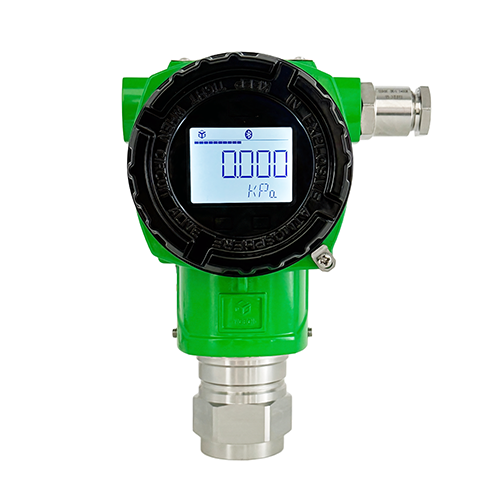
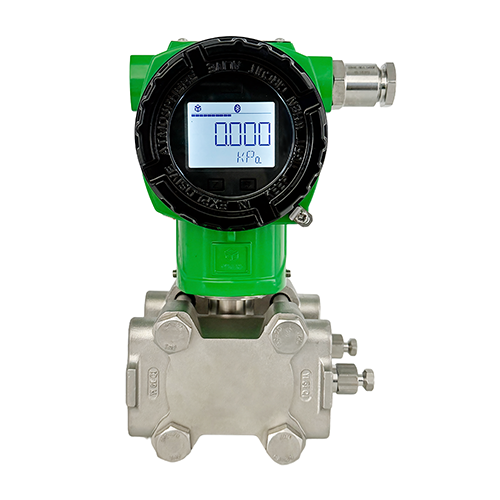
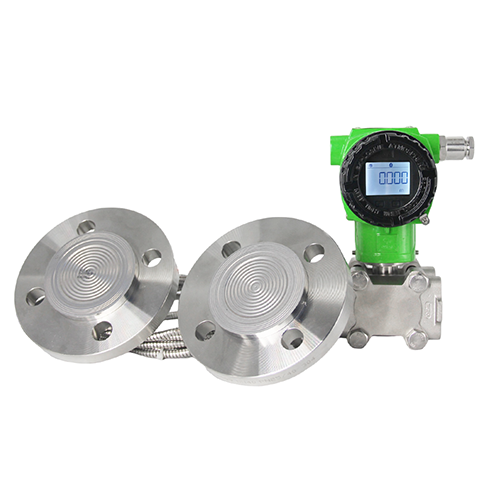
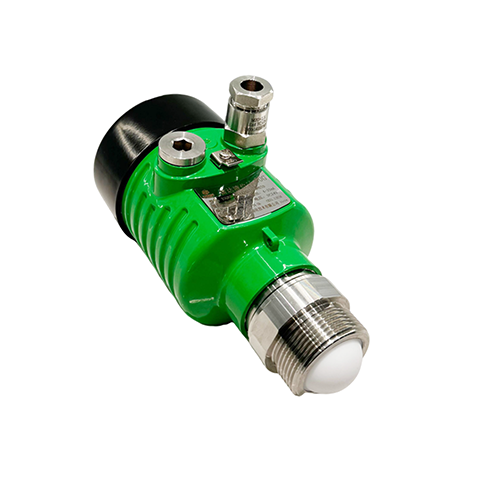
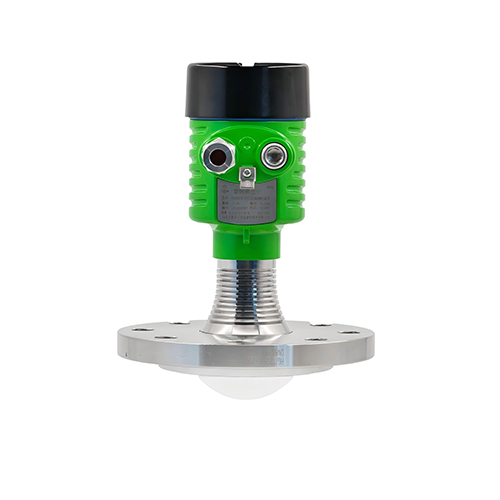
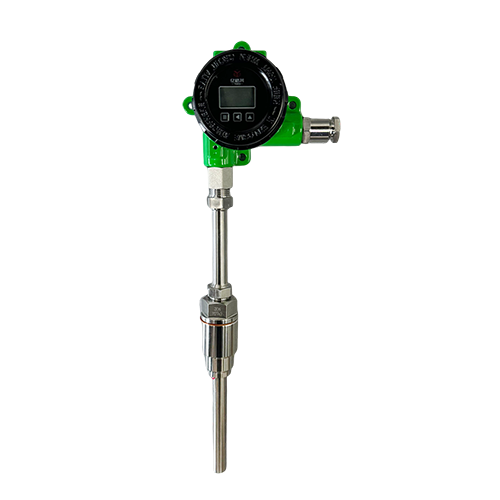
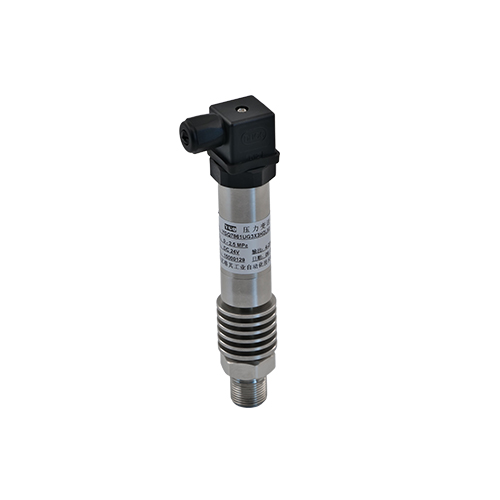
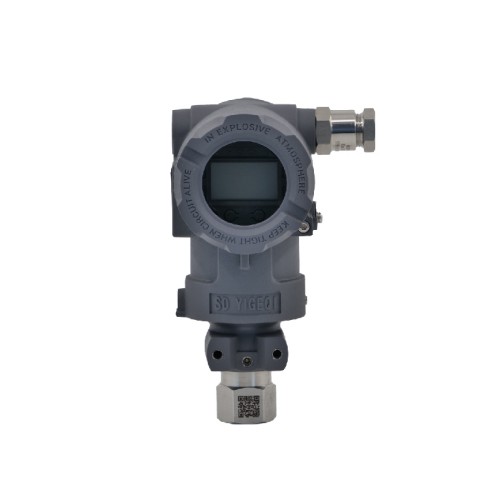
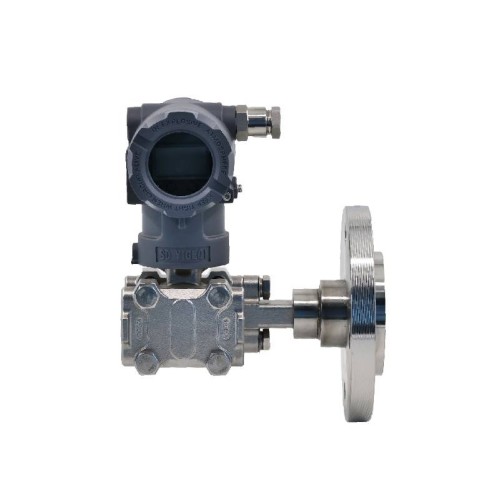
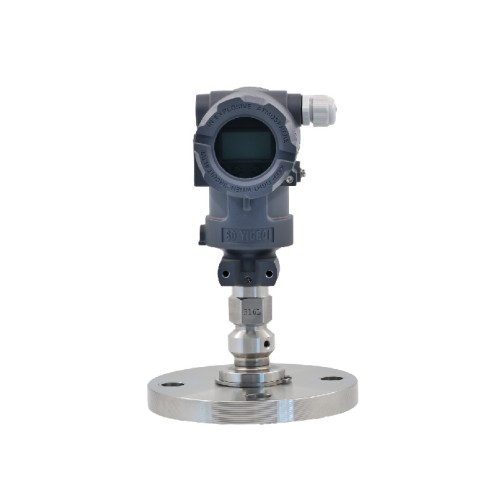
Core monitoring objectives: Monitoring of NaOH storage tanks, with two core physical parameters: 1. Level: Controlling inventory levels to prevent overflow or evacuation is crucial for trade settlement and safety. 2. Temperature: NaOH releases/endothermics heat during dissolution or storage; temperature affects its concentration, crystallization point, and corrosiveness, and is related to tank safety (e.g., cooling system control).
Applications of Radar Level Gauges:
Function: Serving as the "eyes" of storage tanks, enabling non-contact, high-precision continuous level measurement.
Key Application Points Summary (Briefly restated based on the preceding text):
• Selection Considerations: Prioritize 80GHz radar, equipped with a PTFE/PEEK sealed radome (horn antenna or planar antenna) to handle steam and crystallization phenomena.
• Installation Considerations: The installation location must avoid the inlet, agitator, and internal components to ensure an unobstructed beam path. For dome-shaped storage tanks, it is recommended to install it at the center of the tank top.
• Advantages: Completely non-contact, corrosion-resistant, virtually maintenance-free, unaffected by density and temperature changes, and extremely high accuracy.
• Output Signal: Typically a 4-20mA HART or other digital signal, connected to a DCS/PLC for display, alarm, and interlock control.
Application Role of Temperature Transmitters:
The "skin" of the storage tank, sensing the temperature state of the medium and providing crucial data for process control and safe production. Key Application Points and Challenges: NaOH solution is also highly corrosive to temperature measuring instruments and may present problems such as high temperature and crystallization.
1. Core Selection Principle: Integrated temperature transmitter with corrosion-resistant sleeve. The transmitter head, sensor, and protective sleeve are integrated into one unit.
· Advantages: Compact installation, good overall protection. Suitable for applications with limited space or high requirements for ease of installation.
2. Temperature Measurement Point Selection: Representativeness: It should be inserted at a position that represents the overall average temperature, usually not near the feed inlet or heating/cooling coils. Multi-point temperature measurement: For large or high-level storage tanks, it is sometimes necessary to install multiple temperature measurement points at different heights to monitor temperature stratification.
3. Corrosion-resistant Material Selection (Crucial):
· Temperature sensing sleeve/sheath material: It must be selected from materials that can withstand NaOH corrosion. Preferred materials: Hastelloy C-276, titanium (for specific concentrations/temperatures), nickel-based alloys.
Optional materials: 316L stainless steel (only suitable for low concentrations, room temperature, higher risk).
Surface treatment: PTFE coating on stainless steel sleeves significantly improves corrosion resistance and prevents scaling and adhesion.
Sealing and connection: Gaskets at process connections should preferably be made of PTFE or graphite.
4. Signaling and Integration: • Modern temperature transmitters are generally intelligent, outputting a 4-20mA + HART/Fieldbus signal.
• The temperature signal can be connected to a DCS for: Display and Recording: Real-time temperature monitoring. Alarms: High or low temperature alarms to prevent safety hazards or crystallization. Interlocking Control: Automatic start/stop of the cooling water system for the tank jacket/coil, or control of the feed/discharge pumps to maintain process temperature.
System Integration and Collaborative Applications:
Radar level gauges and temperature transmitters do not operate in isolation; they collaborate within a DCS/PLC system to achieve a higher level of monitoring and optimization. 1. Safety Interlocks: High-level interlock pump shutdown: When the radar level gauge issues a high-high-level alarm, it interlocks and shuts down the feed pump to prevent overflow. Temperature-level combined alarm: High temperature accompanied by a high level may indicate increased risk; the system can trigger a higher-level alarm. 2. Crystallization Prevention: When the temperature transmitter detects a temperature approaching the crystallization point of the NaOH solution, the system can proactively activate heating or increase the storage temperature to prevent crystallization blockage in pipelines and tanks. 3. Data Diagnosis: By comparing the radar level gauge readings with inferred values calculated from parameters such as differential pressure and temperature, cross-validation can be performed to detect instrument malfunctions or process anomalies in advance.
