
Challenge: Crystallization "Stubborn Problem" Plagues Traditional Measurement
One of the company's sodium hydroxide storage tanks, due to process limitations, easily precipitates crystals in the medium at low temperatures. The previously used ordinary flange-type pressure transmitters, with their pressure taps located directly on the tank wall, became a "disaster area" for crystal accumulation. The continuous accumulation of solid material not only caused severe distortion of the measurement signal and inaccurate level display, but also forced frequent production line shutdowns for manual cleaning and instrument maintenance. This not only brought huge maintenance costs but also posed a serious challenge to production continuity, process stability, and safety management.
Breakthrough: Addressing the Pain Point with an "Insertion" Design
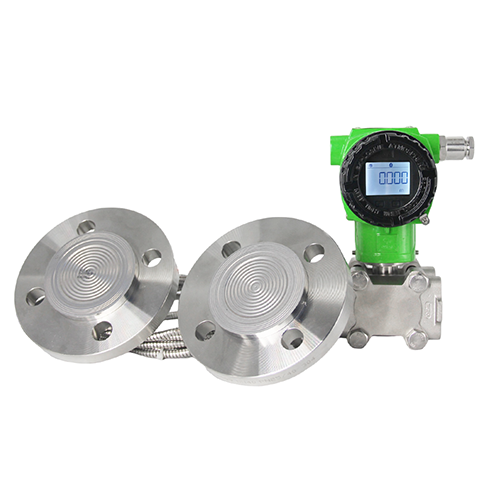
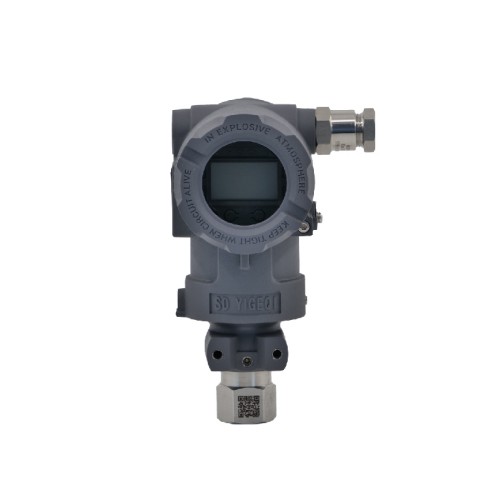
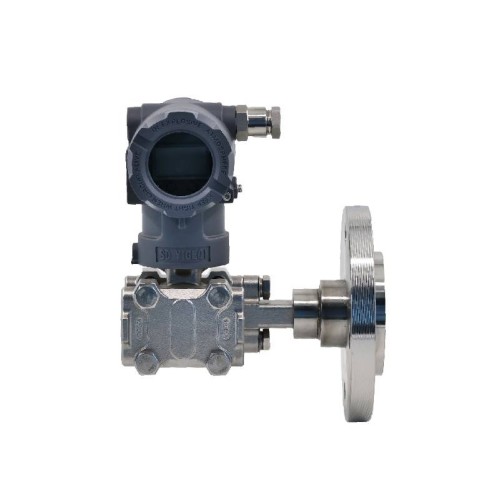
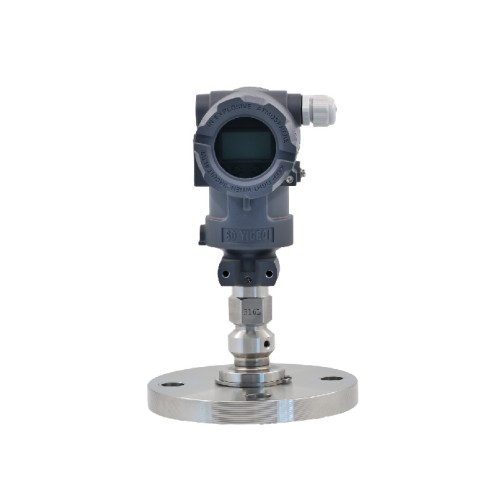
Faced with this common industry problem, the technical team, after rigorous evaluation, decided to adopt an extended diaphragm insertion flange level transmitter as an alternative solution. The core innovation of this solution lies in its unique mechanical structure:
1. Deep Insertion: The transmitter uses a custom-length extension tube to directly deliver the critical pressure-sensing diaphragm to the center of the tank, ensuring complete immersion in the process medium.
2. Barrel Flange Connection: A robust and reliable DN80 PN16 RF standard flange interface ensures a tight and secure installation.
3. Material Upgrade: The diaphragm, which comes into direct contact with the highly alkaline medium, is made of Hastelloy C, a alloy with excellent corrosion resistance, fundamentally guaranteeing the long-term durability of the sensor.
Results: Stable Operation and Significant Efficiency Leap
Since the new transmitter was put into use, the effects have been immediate:
1. Elimination of Blockage Problems: Because the measurement point is far from the easily crystallizing tank wall boundary layer, the medium flow is relatively sufficient, completely eliminating the possibility of crystallization blockage at the pressure tap.
2. Significantly Improved Measurement Accuracy and Stability: The diaphragm directly senses the actual liquid column pressure, with no signal attenuation or delay, achieving high-precision and continuous liquid level monitoring.
3. Significantly Reduced Maintenance Costs: Stable instrument operation eliminates the need for preventative unclogging or frequent maintenance, reducing manpower and material consumption.
4. Guaranteed Production Continuity: Reliable level data provides a solid basis for automated control and safety interlocks, effectively improving overall production efficiency and safety.
Industry Implications: Providing Standardized Approaches for Complex Operating Condition Measurement
This successful application demonstrates that selecting the right instrument type is more crucial than simply pursuing high-configuration solutions for specific process challenges. The extended diaphragm insertion flange level transmitter, with its inherent advantages of anti-clogging, corrosion resistance, flexible installation, and convenient maintenance, has become the standardized preferred solution for measuring the level/pressure of easily crystallizing, high-viscosity, slurry, and corrosive media. It is widely applicable to multiple industries such as chemical, water treatment, food, and pharmaceutical, providing reliable underlying sensing support for the digital transformation and intelligent upgrading of process industries.
