
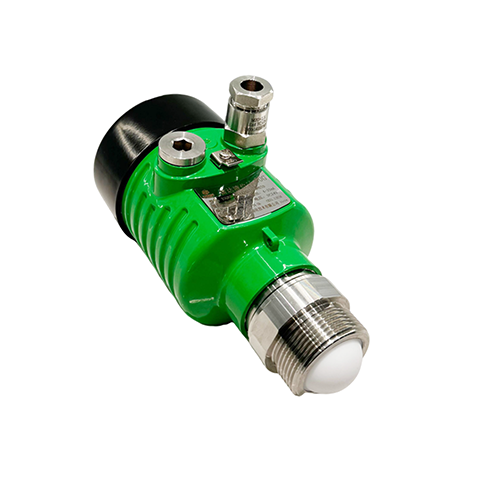
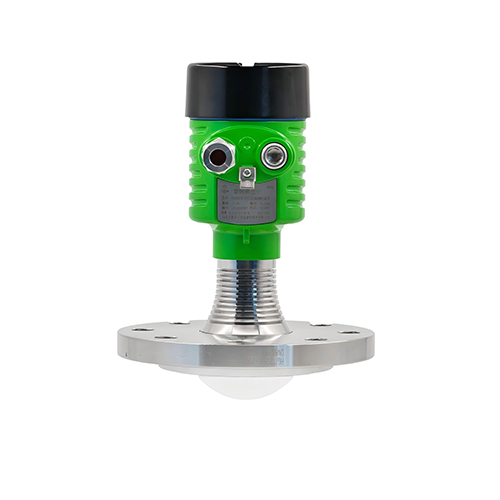
I. The Core Impact of Frequency Band Differences The operating frequency of a radar level gauge directly determines its signal characteristics. A 26GHz radar level gauge uses the 26.5-27.5GHz frequency band, while an 80GHz gauge operates in the 76-81GHz range. These frequency band differences bring about numerous variations.
In terms of signal wavelength, the 26G radar has a wavelength of approximately 11mm, while the 80G radar shortens it to 3.7mm. The shorter the wavelength, the easier it is to focus the signal. The 80G radar has a stronger ability to detect minute changes in liquid level, which is why it excels in high-precision scenarios.
The long wavelength characteristic of the 26G radar makes it more stable when penetrating interfering media such as dust and steam, and it exhibits greater adaptability in complex operating conditions.
II. Key Differences in Performance Parameters
1. Measurement Accuracy and Resolution
The measurement accuracy of an 80G radar level gauge is typically ±1mm, and its resolution can reach 0.1mm, far exceeding the ±5mm accuracy and 1mm resolution of a 26G radar.
This difference is particularly critical in industries with stringent requirements for level control, such as fine chemicals and pharmaceuticals. For example, in the preparation of pharmaceuticals, even a small level error can affect product purity.
For 26G radar, in measuring the level of tanks over large spans (e.g., 0-80m), the error percentage can be controlled within a reasonable range, fully meeting the metering needs of most industrial storage facilities.
2. Beam Angle and Installation Requirements
The beam angle is a crucial parameter of radar level gauges, directly affecting the installation space requirements. The beam angle of an 80G radar can be compressed to within 3°, while that of a 26G radar is typically between 8-12°.
The narrow beam angle means that the 80G radar can avoid obstacles such as agitators and heating elements inside the tank, enabling accurate measurements even in small-diameter storage tanks.
The 26G radar, due to its larger beam angle, requires a larger unobstructed area for installation; otherwise, it is susceptible to interference. However, in large open tanks, the wide beam angle can reduce measurement errors caused by liquid level fluctuations.
III. Precise Matching of Applicable Scenarios
Advantages of 26G Radar
① High-dust environments: such as cement silos and pulverized coal tanks, where long-wavelength signals have strong penetration and are less affected by dust attenuation.
② Large tank storage: large-capacity containers such as oil storage tanks and chemical raw material tanks, where the wide beam can adapt to large fluctuations in liquid level.
③ Simple operating conditions: in operating conditions where high precision requirements are not high, 26G radar offers better cost performance.
Core application areas for 80G radar
① Fine chemicals: equipment requiring high-precision control such as reaction kettles and small metering tanks.
② Complex operating conditions: scenarios involving stirring, foaming, and steam, where the narrow beam can effectively avoid interference. ③ Small space installation: vertical storage tanks in food processing, small material tanks in the pharmaceutical industry, etc.
IV. Key Technical Considerations for Radar Selection Decisions
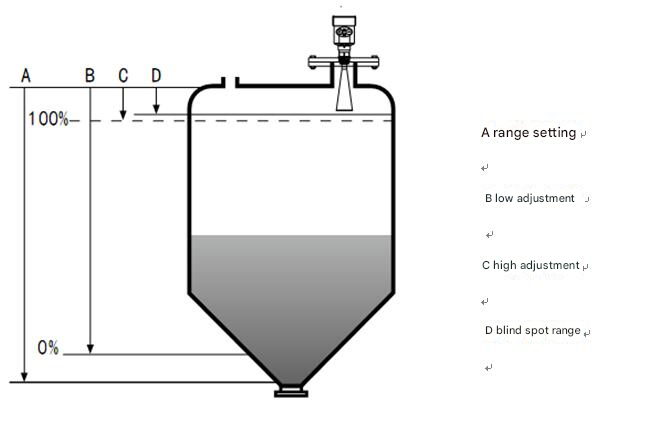
When selecting a radar level gauge, the following factors need to be comprehensively evaluated: Measurement range: The effective measurement distance of 80G radar is typically 0-120m, while 26G radar can reach 0-80m. Medium characteristics: Viscosity, corrosiveness, and the likelihood of foam formation can affect signal reflection. Installation conditions: The tank diameter, internal structure, and presence of obstacles determine the beam angle selection. Environmental interference: Parameters such as temperature, pressure, and dust concentration must match the radar's protection level.
Whether it's a 26G or 80G radar level gauge, technical adaptation is required based on specific operating conditions. Correct selection not only improves measurement accuracy but also reduces subsequent maintenance costs, providing a reliable guarantee for the stable operation of industrial production.
Advantages Summary:
Non-contact Measurement: No contact with the measured medium is required, avoiding contamination and equipment wear. High Precision and Reliability: 80GHz continuous frequency modulation (FM) wave testing and HART 7 communication protocol enable accurate measurement of levels in various media, suitable for liquids, solids, and slurries. Strong Anti-interference Capability: SIL certified, lightning and explosion resistant, unaffected by environmental factors such as temperature, pressure, steam, and dust, suitable for complex working conditions. Easy Installation and Low Maintenance Costs: Compact structure, flexible installation, and no need for frequent calibration and maintenance, reducing operating costs.
