
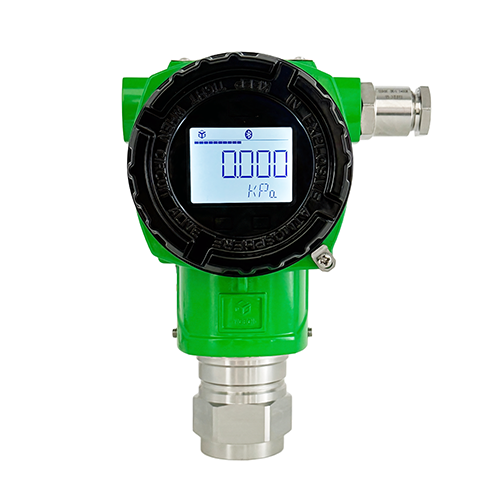
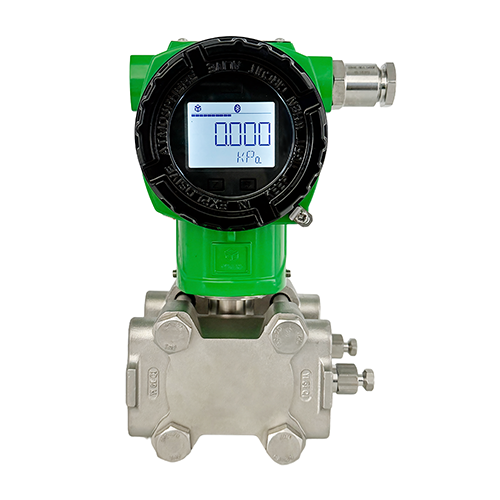
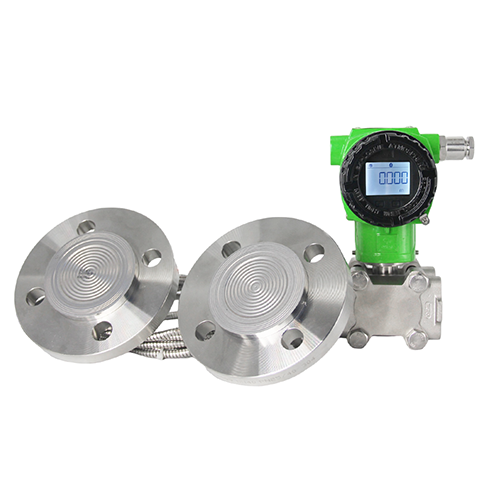
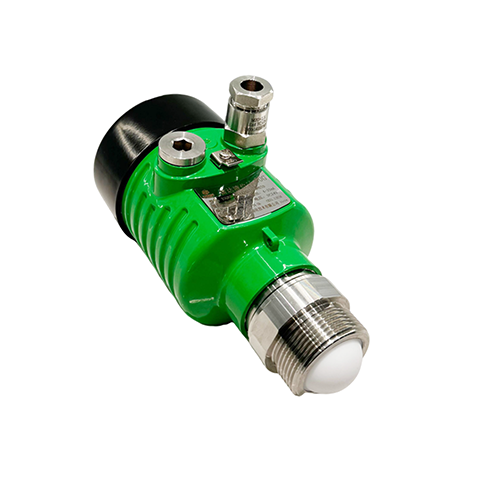
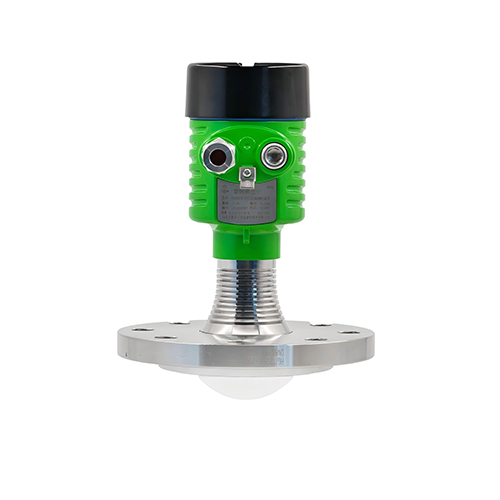
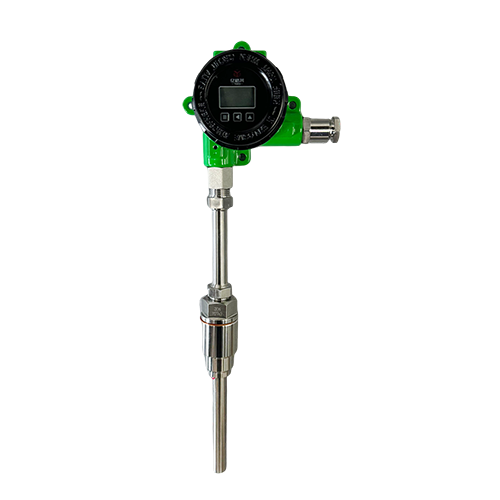
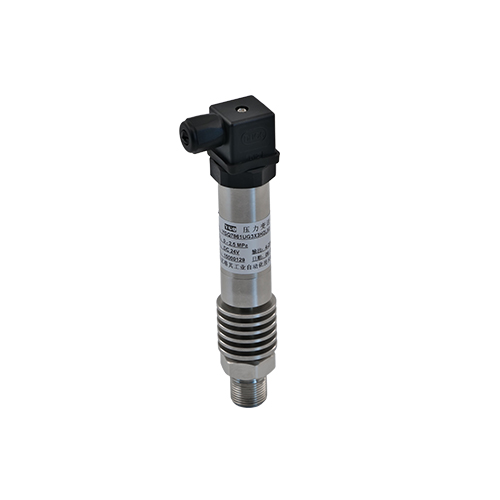
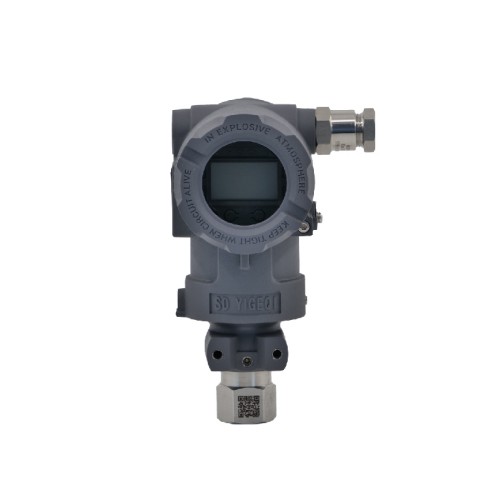
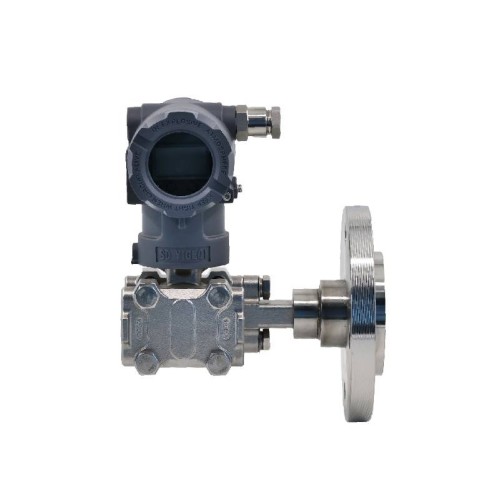
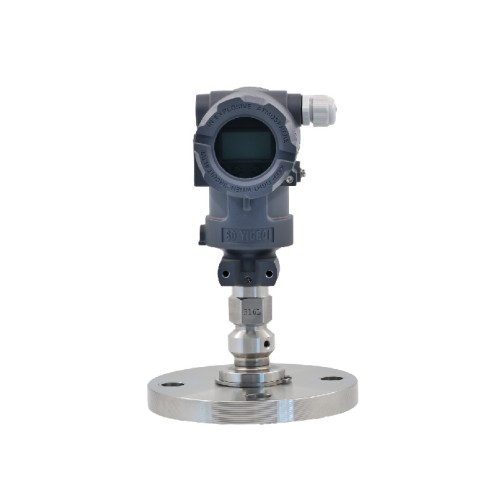
Transmitter Diaphragm
To understand the value of PFA diaphragms, it's essential to first clarify their core role in level transmitters.
Signal Transmission Core: The diaphragm directly contacts the measured medium. When a pressure difference exists on both sides, the diaphragm undergoes a slight deformation. This deformation is converted into changes in capacitance, inductance, or resistance through its internal structure, ultimately outputting a standard electrical signal (e.g., 4-20mA) to achieve quantitative measurement of the pressure difference.
Media Isolation Barrier: The diaphragm isolates the measured medium from the precision sensing elements inside the transmitter, preventing corrosive or toxic media from entering the core components and avoiding equipment damage or safety accidents.
In short, the diaphragm's performance directly determines the measurement accuracy, stability, and service life of the level transmitter. In the complex operating conditions of industries such as chemical, pharmaceutical, and metallurgical processing, the diaphragm's durability is particularly crucial.
The Weaknesses of Ordinary Diaphragms
Most common ordinary diaphragms on the market are made of metals such as stainless steel (e.g., 316L) and Hastelloy. Under harsh operating conditions, they often expose several shortcomings:
1. Insufficient Corrosion Resistance
Faced with highly corrosive media such as high concentrations of hydrochloric acid, sulfuric acid, and sodium hydroxide, metal diaphragms are easily corroded and perforated, leading to measurement failure and even media leakage.
2. Limited High-Temperature Resistance
Traditional metal diaphragms are prone to oxidation at high temperatures, affecting deformation sensitivity; some non-metallic diaphragms have a lower upper limit for long-term use, and are prone to aging and deformation after exceeding this temperature.
3. Severe Media Adhesion
In scenarios such as food processing and slurry transportation, media easily adhere to the surface of traditional diaphragms, causing deformation lag, increased measurement errors, and potential bacterial growth leading to hygiene problems.
These weaknesses mean that the service life of ordinary diaphragms under harsh operating conditions is typically only 3-6 months. Frequent replacement not only increases maintenance costs but also affects production efficiency due to downtime.
How robust are PFA diaphragms?
As a high-performance fluoroplastic, PFA, with its unique molecular structure and physicochemical properties, has become the "ideal choice" for solving the pain points of traditional diaphragms. Its core advantages can be summarized in four points:
1. Superior Corrosion Resistance: PFA possesses extremely strong chemical inertness, tolerating almost all known strong acids, strong alkalis, organic solvents, and strong oxidants, except for a very few media such as molten alkali metals and chlorine trifluoride.
2. Low-Friction "Non-Stick" Surface: PFA has a coefficient of friction of only 0.02-0.04, one of the lowest among known solid materials. This means that media (especially viscous materials and powders) are difficult to adhere to the diaphragm surface, reducing measurement errors and simplifying cleaning.
3. Excellent Spray Coating Properties: PFA has good melt flowability, allowing for the formation of uniform (typically 50-100 μm) and highly adhesive coatings on metal substrates through processes such as electrostatic spraying and fluidized bed spraying.
4. Long-term stability: PFA has a stable molecular structure, making it resistant to aging and decomposition, resulting in slow performance degradation over long-term use. Under normal operating conditions, the lifespan of PFA diaphragms is 2-4 times that of ordinary diaphragms, significantly reducing equipment maintenance costs and downtime risks.
With its excellent properties such as corrosion resistance, high temperature resistance, non-stick properties, and ease of molding, PFA diaphragms provide a robust "corrosion-resistant armor" for level transmitters, making them particularly suitable for long-term use under harsh conditions.
Yigeqi PFA Membrane Manufacturing Process
High-quality PFA material requires a sophisticated spraying and sintering process to achieve optimal performance. Key process parameters affecting PFA membrane quality include:
Coating Thickness: Too thin a coating leads to wear, while too thick a coating affects the membrane's deformation sensitivity. High-quality membranes typically have a coating thickness deviation within ±5μm to ensure measurement accuracy.
Substrate Pretreatment: The substrate (e.g., 316L stainless steel) requires pretreatment such as sandblasting and degreasing to increase surface roughness, improve the adhesion between the PFA coating and the substrate, and prevent peeling.
Sintering Temperature: After spraying, sintering at a high temperature of 380-420℃ is required to fully melt and level the PFA particles, forming a dense coating structure and enhancing corrosion resistance.
