
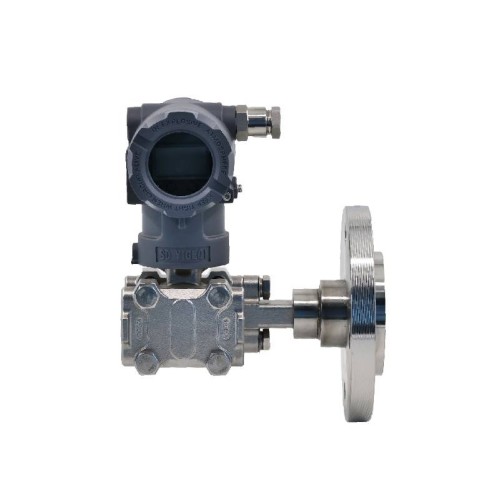
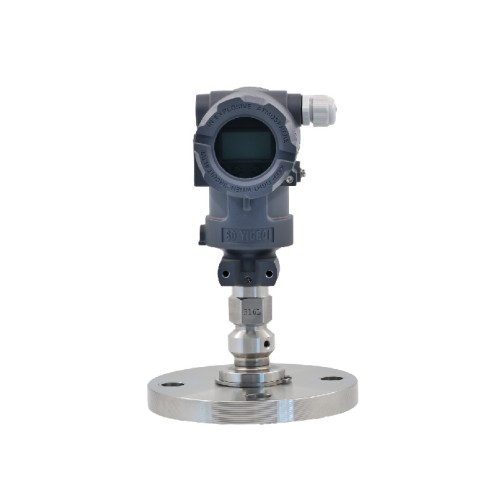
First, understand why calibration cycles cannot be taken for granted.
1、Accuracy drift leading to misjudgment:** Over long-term use, sensors are affected by factors such as temperature, vibration, and media corrosion, causing measured values to gradually deviate from the true value. For example, the "overpressure threshold" that should trigger an alarm may become a "safety blind spot" due to calibration delays.
2、Compliance risk:** In industries such as chemical, pharmaceutical, and food processing, mandatory national standards clearly require measuring instruments to be calibrated within a specified period. Failure to meet these standards may result in production shutdowns and rectification.
Three Core Factors for Precisely Determining Calibration Cycles
1: Harsh Operating Conditions: The more complex the environment, the shorter the calibration cycle.
Operating conditions are the "primary variable" affecting calibration cycles, and can be categorized as follows:
①Harsh Operating Conditions (Recommended calibration every 3-6 months):
Transmitters exposed to corrosive media (such as acid and alkali solutions, chlorine gas), high-temperature (>150℃) or low-temperature (<-20℃) environments, or high-frequency vibration (such as near pumps). These environments accelerate sensor aging, with accuracy drift occurring 3-5 times faster than under normal operating conditions.
②Normal Operating Conditions (Recommended calibration every 6-12 months):
Equipment measuring media at normal temperature and pressure (such as water, air) and installed in stable environments (no significant vibration or dust). The calibration cycle can be adjusted according to the equipment manual's recommended cycle and actual usage conditions.
③Special Operating Conditions (Customized Cycles as Needed):
Transmitters used for safety interlocks (e.g., emergency pressure relief valve control) and trade settlement (e.g., product metering) require strictly adhered to industry standards for shortened calibration cycles; some scenarios even necessitate monthly calibration.
2: Equipment Characteristics: Differentiated Treatment for New and Old Equipment
New Equipment (First 2 Calibration Cycles Can Be Shortened):
Cycle Rules: If the initial calibration error is <0.1% (within the allowable accuracy range), and the second calibration remains stable, the normal cycle applies from the third calibration onwards.
If the initial calibration error is close to the allowable upper limit, installation issues should be investigated, and the cycle should be shortened to 3-6 months.
Older Equipment (Cycle Not Exceeding 8 Months):Applicable Scope: Equipment used for more than 5 years (sensor performance is prone to degradation).
Cycle Requirements: Even without obvious faults, the calibration cycle must be controlled within 8 months.
Special Circumstances: If two consecutive calibration errors exceed the tolerance, it is recommended to replace the sensor or the entire unit to avoid safety accidents.
3. Industry Standards are the "Bottom Line"
Different industries have specific requirements regarding calibration cycles: In the chemical industry, according to GB 50493-2019, the calibration cycle for transmitters used for safety monitoring should not exceed 12 months;
In the pharmaceutical industry, according to GMP (Good Manufacturing Practice), the calibration cycle for transmitters in process steps that come into direct contact with pharmaceuticals needs to be shortened to 3-6 months;
In the power industry, according to DL/T 1573-2016, the calibration cycle for transmitters used for water vapor monitoring should not exceed 6 months.
Quick Reference: Calibration Recommendations for Various Scenarios
Based on operating conditions, equipment age, and industry scenarios:
In harsh operating conditions (such as corrosive chemical environments), regardless of equipment age, calibration is recommended every 3-6 months.
In normal operating conditions, equipment used for 0-5 years (such as general industrial water monitoring) is recommended to be calibrated every 6-12 months; equipment used for more than 5 years (such as general industrial gas monitoring) is recommended to be calibrated every 6-8 months.
In special operating conditions, for safety interlock scenarios (such as emergency pressure relief control), regardless of equipment age, calibration is recommended every 1-3 months; for trade settlement scenarios (such as product metering), calibration is recommended every 3-6 months.
